

All Products
Check out our books, resources, and other products designed to support babies and toddlers and their families.

Buying in Bulk?
Let us know the size of your order and what you’re interested in and one of our staff will get back to you.
Contact UsFilter by:

SORT BY:


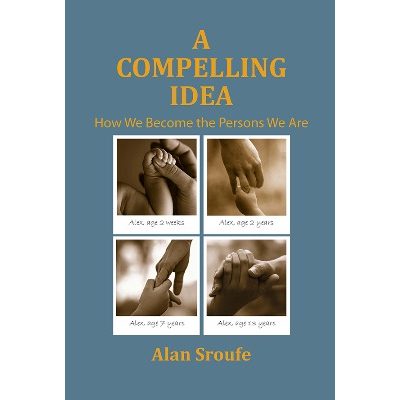
A Compelling Idea
A Compelling Idea is an autobiographical window into the personal and professional journey of a “superstar psychologist.” Alan Sroufe and his team at the University of Minnesota Institute of Child Development conducted the longest running study of human psychological development, establishing the reasons why we each behave as we do and see the world as we do. Sroufe’s groundbreaking theoretical and empirical contributions to the fields of developmental psychology and developmental psychopathology have been reported to the academic world in over 150 papers and journal articles and seven books.
From the beginning of his academic career, Alan’s motivation to pursue the study of human development was personal. Having been raised in a dysfunctional family, he wanted to know why he had the problems he did and how his mental health could be improved. A Compelling Idea is his personal story of this road to discovery.
Case Studies In Infant Mental Health
This collection offers 12 real-life case studies written by infant mental health specialists about their work with young children and families. Providing valuable insight into the infant mental health field, each case study reveals the supervision and consultation that supported the specialist, and the specialist's interaction with the larger service system.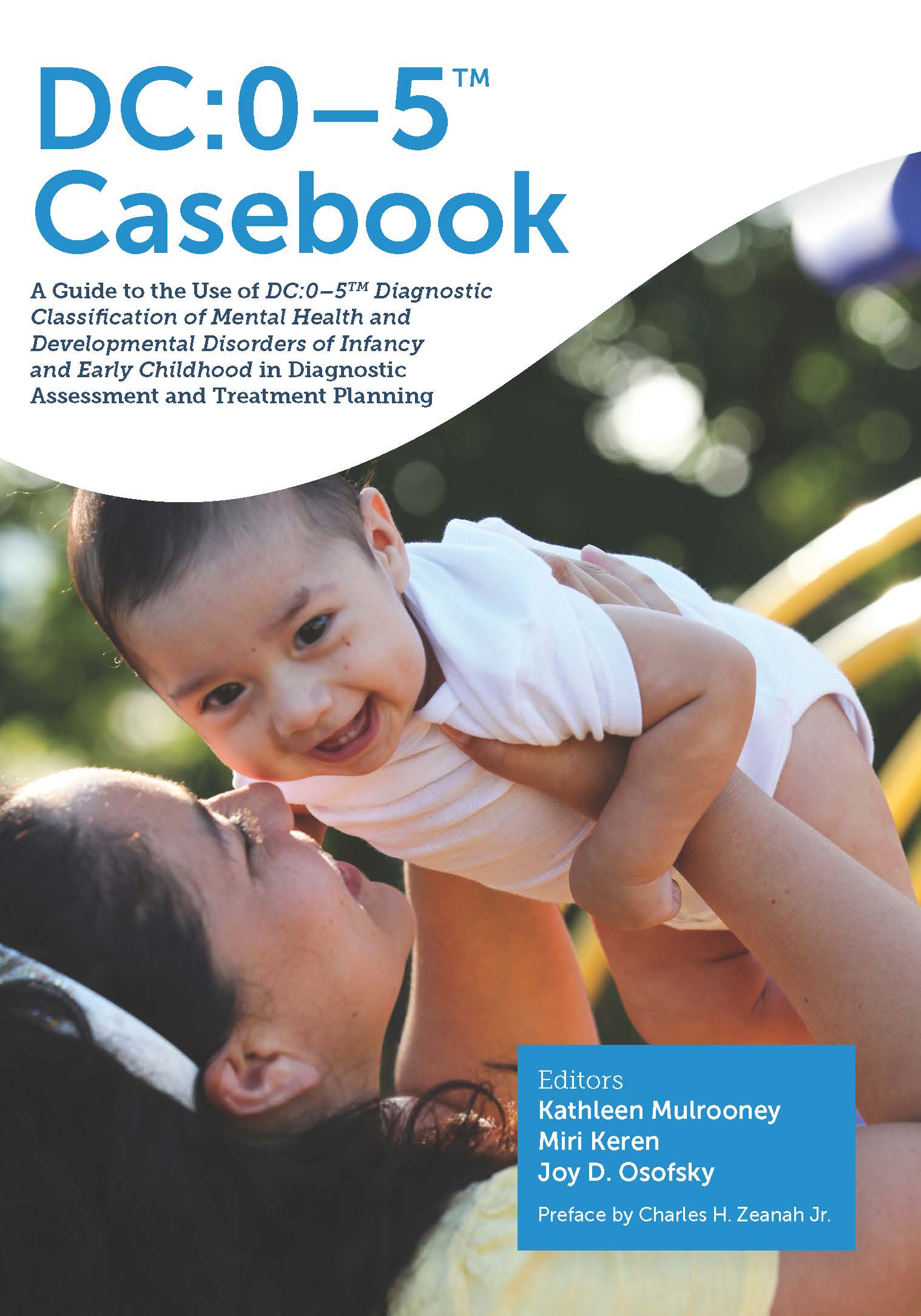
DC:0-5™ Casebook
A Guide to the Use of DC:0–5 Diagnostic Classification of Mental Health and Developmental Disorders of Infancy and Early Childhood in Diagnostic Assessment and Treatment Planning.
Editors Kathleen Mulrooney, Miri Keren, and Joy D. Osofsky Preface by Charles H. Zeanah Jr. The DC:0–5 Casebook is designed to enhance understanding of not only clinical disorders but also the use and importance of the multiaxial framework in understanding the comprehensive diagnostic “story” of the child’s and family’s experience through a rich contextual frame. Each section of the casebook outlines the case and provides case conceptualization, diagnostic summary, discussion, and some questions for the reader to reflect on related to the case and clinical issues raised.
DC:0-5™ Clinical Training – August 2023
DC:0–5™: Diagnostic Classification of Mental Health and Developmental Disorders of Infancy and Early Childhood captures the latest scientific findings and clinical research on infant and early childhood mental health.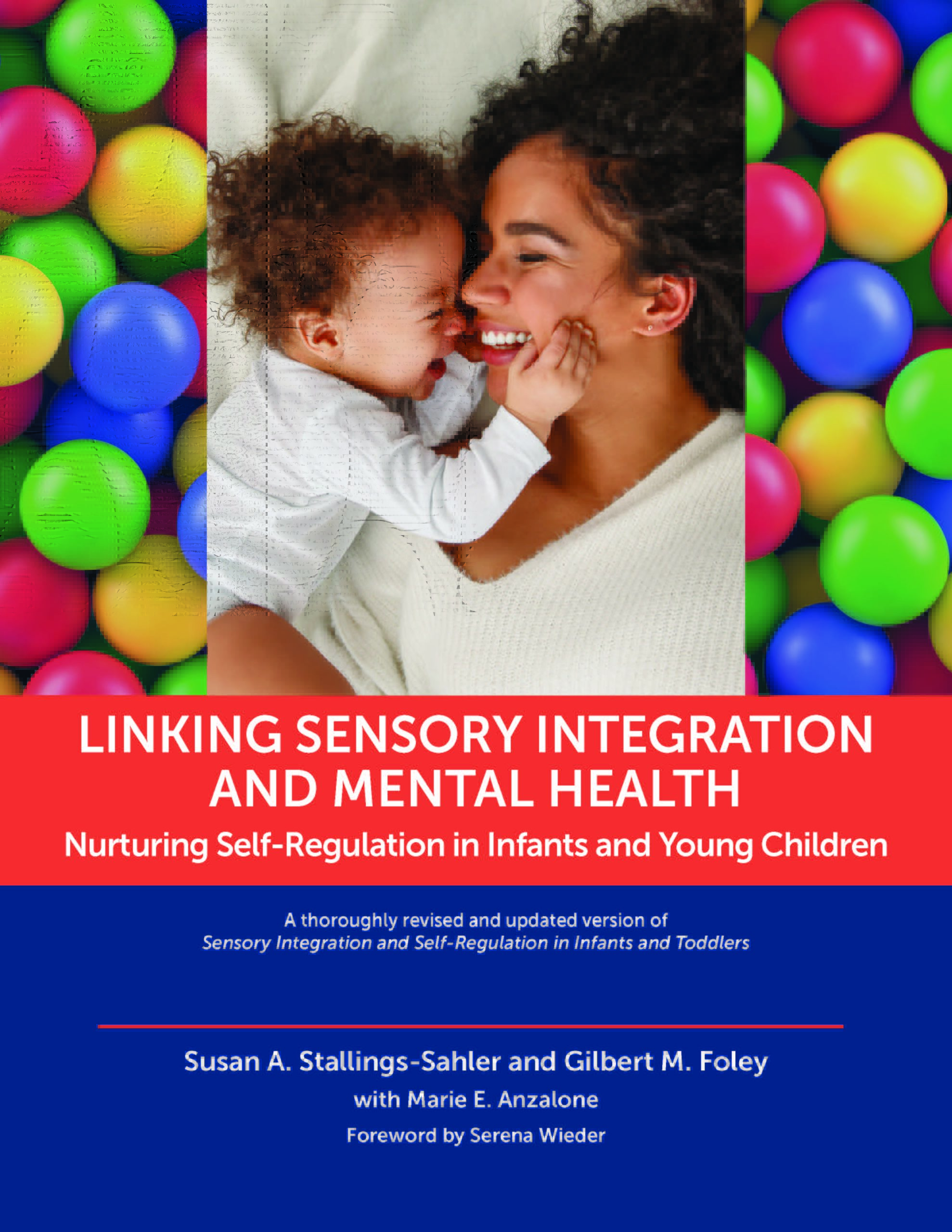
Linking Sensory Integration and Mental Health
Because so many people have vital roles to play in helping infants and young children with sensory processing difficulties interact with their environments and the significant people and relationships in them, the authors, Susan A. Stallings-Sahler and Gilbert M. Foley, have written this book for a broad multidisciplinary audience of service providers, researchers, and policymakers serving infants, young children, and their families. This edition has been expanded to highlight the intersection of sensory processing, sensory processing disorders, and infant and early childhood mental health (IECMH). The book is targeted to a wide array of disciplines from the therapeutic, educational, medical, and psychosocial fields. Practitioners who work in a variety of settings will find it meaningful—neonatal intensive care follow-up programs, early intervention programs, preschools, developmental and mental health clinics, IECMH programs, child life programs, social service agencies, and child care centers. Parents and family members may also find the contents helpful in understanding and caring for their child with sensory, self-regulatory, and social–emotional challenges in ways that will also enhance their relationships and family life.
This book is designed to help readers achieve the following goals:
1. Understand the sensory development of infants and young children as well as how the tapestry of sensory processing, self-regulation, and social–emotional capacities become interwoven as development and the child’s personality emerge.
2. Understand and appreciate how sensory processing and self-regulation are intimately linked and contribute to social–emotional development and the broader construct of IECMH and psychopathology.
3. Explore the fundamental neurodevelopmental and neurophysiological underpinnings of sensory processing and its influence on attention, movement, self-regulation, attachment, and IECMH as well as areas where dysfunction may occur.
4. Learn about assessment and intervention approaches designed to promote young children’s self-regulation, adaptive behavior, social–emotional development, and mental health through enriching interactions and goodness-of-fit with the physical, relational, and social world.
5. Become aware of new scientific evidence, directions, and outstanding questions in both basic and applied research relevant to this aspect of practice with this unique population.